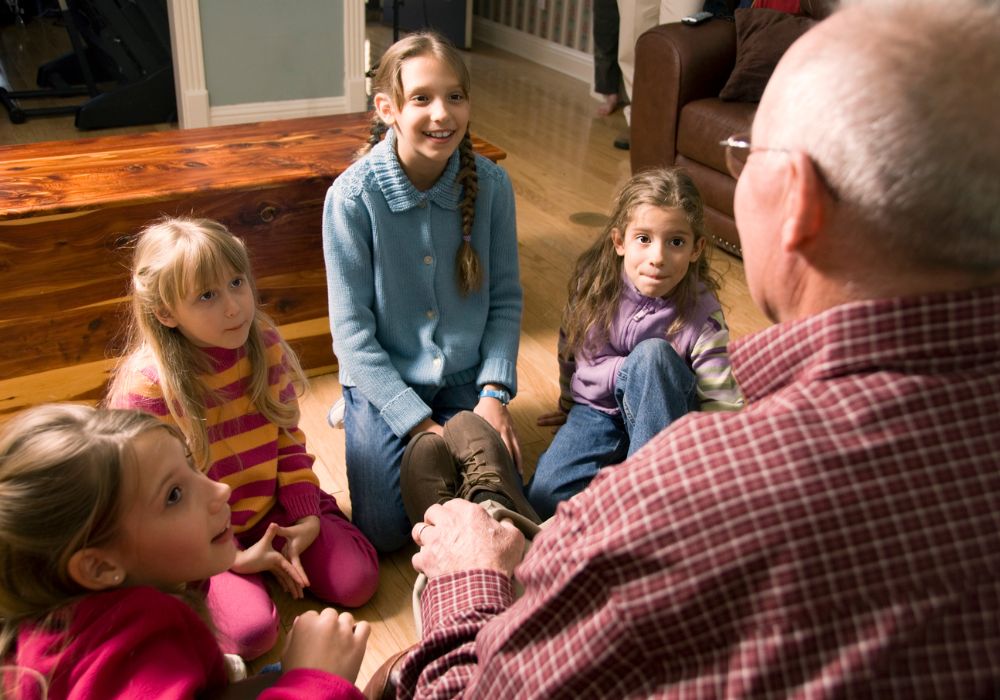
The Power of Storytelling: Encouraging Seniors to Share Their Life Experiences
Key Takeaways
-
Storytelling provides cognitive benefits for seniors, helping maintain mental acuity and memory function while reducing isolation and depression
-
Sharing life experiences creates a valuable legacy for families and communities, preserving history and wisdom for future generations
-
The storytelling process can be therapeutic, offering seniors a sense of purpose, identity affirmation, and improved emotional well-being
-
Creating a supportive environment with the right prompts and tools makes it easier for seniors to share their stories comfortably
-
Advanced Care can help facilitate storytelling activities for seniors through personalized care that nurtures communication and social connection
Why Should We Encourage Seniors to Share Their Stories?
Seniors possess a wealth of experiences, wisdom, and historical perspectives that risk being lost without intentional preservation. Encouraging storytelling not only safeguards these valuable narratives but also provides profound cognitive, emotional, and social benefits for older adults. When seniors share their stories, they experience improved mental health, strengthened connections with others, and renewed purpose during a life stage often marked by significant transitions.
Understanding the Significance of Senior Storytelling
Storytelling is one of humanity’s oldest traditions—a practice that connects generations, preserves culture, and transmits wisdom. For seniors, the act of sharing life experiences takes on special significance as they navigate the later chapters of life. The process of recalling, organizing, and sharing personal narratives engages multiple cognitive functions, providing natural exercise for the aging brain.
According to research from the National Institute on Aging, activities that engage the mind, like storytelling, may help maintain cognitive health in older adults. The process of recalling details, sequencing events, and articulating experiences activates various brain regions, potentially supporting neural connections that might otherwise weaken with age.
Beyond cognitive benefits, storytelling addresses a fundamental human need for connection and meaning. Many seniors face significant life transitions—retirement, loss of loved ones, health changes, or moving from long-time homes. These changes can trigger identity crises and feelings of diminished purpose. When seniors share their stories, they reaffirm their identity, reconnect with their accomplishments, and find meaning in their life journey.
From a societal perspective, senior storytelling serves as a living historical record. Today’s seniors have witnessed remarkable historical events—from technological revolutions to social movements, wars, and cultural shifts. Their firsthand accounts provide authentic perspectives that textbooks alone cannot capture. As the Mayo Clinic notes, preserving these narratives enriches our collective understanding of history through personal experiences rather than just dates and facts.
For families, senior storytelling creates an irreplaceable legacy. Children and grandchildren gain insight into their roots, family traditions, and the experiences that shaped their elders. These stories often answer questions family members didn’t know to ask and provide context for family traits, values, and patterns. The Alzheimer’s Association points out that for seniors with memory conditions, storytelling can also help families preserve precious memories before they fade.
Perhaps most importantly, storytelling validates seniors’ lives and contributions. In a culture that often marginalizes older adults, the act of listening attentively to their stories communicates profound respect and acknowledges the value of their experiences. This validation can significantly impact a senior’s sense of worth and well-being during a life stage when many struggle with feelings of irrelevance.
Benefits of Encouraging Seniors to Share Their Life Stories
-
Cognitive Stimulation and Brain Health: Recalling and organizing memories exercises the brain in multiple ways. The process activates both short-term and long-term memory, engages language centers, and requires organizational thinking. Healthline reports that such cognitive engagement may help maintain brain function and potentially delay cognitive decline. When seniors must recall details, sequence events chronologically, and articulate experiences coherently, they’re giving their brains valuable exercise.
-
Emotional and Psychological Benefits: Storytelling often functions as an informal therapeutic process. By revisiting and sharing life experiences, seniors can process unresolved emotions, celebrate achievements, and find meaning in challenges they’ve overcome. Research from the Mayo Clinic suggests that life review through storytelling can reduce depression and anxiety while improving life satisfaction. Many seniors experience a renewed sense of purpose when they recognize that their stories have value to others.
-
Social Connection and Reduced Isolation: The storytelling process naturally creates meaningful social interactions. Whether sharing with family members, caregivers, or in community settings, these exchanges foster connection. According to the National Institute on Aging, such social engagement is crucial for seniors’ overall health, potentially reducing risks of depression, cognitive decline, and even certain physical health problems. Storytelling provides natural conversation topics that transcend small talk, leading to deeper connections.
-
Legacy Creation and Family Bonding: When seniors share their experiences, they create lasting legacies for future generations. These stories help younger family members understand their roots and the experiences that shaped their family. The Alzheimer’s Association notes that recording these stories can be particularly meaningful for families affected by dementia, preserving memories that might otherwise be lost. Many families report that storytelling sessions strengthen intergenerational bonds and increase empathy across age groups.
Effective Approaches to Encourage Senior Storytelling
Strategy 1: Create a Comfortable and Supportive Environment The setting in which storytelling occurs significantly impacts seniors’ willingness to share. Create physical environments that minimize distractions and maximize comfort—quiet spaces with good lighting, comfortable seating, and appropriate temperature. Ensure that any hearing or vision challenges are accommodated with proper seating arrangements and assistive devices if needed.
The emotional environment is equally important. Approach storytelling sessions with genuine interest and patience. Avoid rushing or interrupting, as many seniors need time to recall details or find the right words. Demonstrate active listening through eye contact, nodding, and appropriate responses. Remember that some stories may evoke strong emotions; be prepared to respond with empathy if difficult memories surface. Reassure seniors that all stories are valuable—whether humorous, serious, triumphant, or challenging.
For seniors with cognitive impairments, adapt your approach accordingly. The Alzheimer’s Association recommends shorter sessions, more visual prompts, and focusing on emotional memories rather than factual details. Even when memories are fragmented, the emotional experience of sharing remains valuable.
Strategy 2: Provide Thoughtful Prompts and Starting Points Many seniors don’t know where to begin when invited to share their stories. Well-crafted prompts can overcome this initial hesitation and spark meaningful narratives. Start with open-ended questions that invite detailed responses rather than yes/no answers. Questions like “What was your neighborhood like when you were growing up?” typically yield richer responses than “Did you like where you grew up?”
Consider organizing prompts around themes such as childhood experiences, work life, historical events, family traditions, or life lessons. Physical prompts—photographs, heirlooms, music from their era, or even foods from their youth—can powerfully trigger memories and associated stories. Many seniors respond well to sensory prompts because sensory memories often remain accessible even when other types of recall become challenging.
Timing matters when introducing prompts. Follow the senior’s natural conversational flow rather than rigidly moving through a predetermined list of questions. Allow one story to lead naturally to another, and be attentive to signs of fatigue or emotional overload, which might indicate it’s time to conclude the session.
Strategy 3: Utilize Various Recording Methods and Formats Capturing stories for preservation requires considering both the senior’s comfort and the intended use of the materials. Traditional written documentation works well for some, either through transcribing conversations or encouraging seniors to write memoirs or letters to future generations. Audio recordings preserve the authentic voice, complete with accents, laughter, and emotional nuances that written words cannot capture.
Video recordings add facial expressions and body language, creating the most complete record but potentially causing more self-consciousness. Digital storytelling platforms combine photos, voice recordings, and text to create multimedia narratives that engage multiple senses. Some seniors enjoy creating memory books that combine photos with written captions or stories.
Match the recording method to the senior’s preferences and abilities. Some may feel uncomfortable on camera but enjoy speaking into an audio recorder. Others might prefer writing at their own pace. Whatever method you choose, ensure it doesn’t interfere with the natural flow of storytelling. The best technology is unobtrusive enough that both storyteller and listener can focus on the human connection rather than the recording process.
Strategy 4: Develop Ongoing Storytelling Routines and Activities Rather than treating storytelling as a one-time project, integrate it into regular routines. Consistent, shorter sessions often yield better results than occasional marathon interviews that might cause fatigue. Consider establishing a weekly “story time” when family members or caregivers intentionally collect new stories.
Group storytelling activities can be particularly effective. Story circles where seniors respond to shared prompts allow them to build on each other’s memories and often trigger forgotten recollections. Intergenerational programs that connect seniors with younger community members create meaningful exchanges where both groups benefit—seniors feel valued for their experiences while younger participants gain historical perspectives and wisdom.
Creative projects centered around storytelling provide structure and purpose. These might include creating family cookbooks with stories behind favorite recipes, recording oral histories about historical events, or developing neighborhood memory maps that document how communities have changed over decades. Such projects give storytelling a clear purpose and often motivate more reluctant narrators.
Overcoming Common Challenges in Senior Storytelling
Encouraging storytelling sometimes encounters obstacles that require thoughtful solutions. Many seniors initially dismiss their experiences as “nothing special” or “not worth recording.” This modesty often stems from cultural norms that discouraged self-focus. Overcome this by explaining how their everyday experiences provide valuable historical context and family connection. Sometimes framing storytelling as helping others—preserving family history for grandchildren or documenting community history—motivates seniors who are uncomfortable being the center of attention.
Memory challenges represent another common obstacle. For seniors experiencing normal age-related memory changes or cognitive conditions, recalling details can be frustrating. Address this by focusing on the stories they do remember clearly rather than pressing for forgotten details. Use photographs and other prompts to support recall, and emphasize that imperfect memories still have tremendous value. The Alzheimer’s Association suggests focusing on emotional memories, which often remain accessible even when factual details fade.
Some life stories involve difficult or traumatic experiences that seniors may hesitate to revisit. Respect boundaries around painful topics while gently conveying that challenging stories often contain important wisdom. Create safe emotional space by acknowledging the difficulty of certain memories and allowing seniors to control which stories they share. If storytelling uncovers unresolved trauma, be prepared to connect seniors with appropriate professional support.
Finally, technological barriers may intimidate seniors when recording methods involve unfamiliar devices. Simplify the technology as much as possible, provide clear instructions, and offer assistance without taking over the process. Remember that the relationship and the story are more important than technical perfection.
How Advanced Care Can Help
At Advanced Care, we understand that storytelling is more than just reminiscing—it’s a powerful tool for enhancing quality of life for seniors aging in place. Our comprehensive approach to in-home care naturally supports and facilitates the storytelling process in several meaningful ways.
Our professional caregivers are trained to engage seniors in meaningful conversation that goes beyond basic care tasks. During regular visits, our team members build trusting relationships that create natural opportunities for seniors to share their experiences. Whether during meal preparation, light housekeeping, or companionship time, our caregivers practice active listening and show genuine interest in clients’ stories.
For seniors with cognitive challenges, our memory care support services include reminiscence activities specifically designed to encourage storytelling in ways that accommodate changing abilities. Our team understands how to adapt communication approaches for different cognitive needs, ensuring that every senior has opportunities to share their story regardless of memory challenges.
The consistency of our care model creates ideal conditions for ongoing storytelling. Rather than rushing through tasks, our caregivers spend quality time with clients, allowing conversations to unfold naturally. This unhurried approach often leads to the sharing of meaningful stories that might not emerge in briefer interactions.
Advanced Care’s transportation services enable seniors to visit meaningful locations that can trigger important memories and stories. Whether it’s a childhood neighborhood, a former workplace, or a community landmark, these visits often spark rich narratives that might not surface in home-based conversations.
For families interested in more structured storytelling projects, our care coordinators can help develop personalized approaches based on the senior’s interests, abilities, and communication style. We can recommend appropriate tools and techniques, from simple audio recordings to more elaborate memory books, based on each client’s preferences.
Our bilingual team members ensure that non-English speaking seniors can share their stories in the language they find most comfortable. This linguistic accessibility is crucial for authentic storytelling, as many seniors find it difficult to express nuanced memories in a second language.
Perhaps most importantly, Advanced Care’s emphasis on dignity and independence creates an environment where seniors feel valued and respected—essential conditions for meaningful storytelling. When seniors know their experiences are genuinely appreciated, they’re more likely to share the stories that matter most to them.
Through our bi-monthly wellness assessments, our registered nurses can monitor how storytelling activities affect overall well-being, often noting improvements in mood, cognitive engagement, and social connection. These observations help us continually refine our approach to supporting each client’s storytelling journey.
For families separated by distance, our caregivers can facilitate virtual storytelling sessions using tablets or computers, helping seniors connect with loved ones who cannot be physically present. This technology bridge ensures that family storytelling traditions can continue despite geographic separation.
At Advanced Care, we believe that every senior has a unique story worth preserving. By intentionally creating space for these narratives within our care relationships, we help ensure that valuable personal histories are shared, celebrated, and preserved. Through this process, we support not just physical well-being but also the emotional and social dimensions that contribute to a truly fulfilling life for seniors aging in place.
To learn more about how our personalized care services can support storytelling and other meaningful activities for your loved one, contact us for a free consultation and assessment. Together, we can create care plans that nurture not just physical needs but also the vital human need to share one’s story and leave a lasting legacy.