The dangerous stretch of a Milwaukee summer isn’t the 95-degree afternoon. It’s the third night in a row when the upstairs bedroom of a Bay View bungalow never drops below 82, and an 84-year-old on blood pressure medication has been sleeping in it. Heat builds in older bodies quietly. By the time it feels wrong, it’s already a problem.
For families whose parents are aging in place, in-home care in Milwaukee often becomes most important during the two or three worst weeks of July and August. A caregiver in the house means someone is watching the water intake, the color of the skin, the confusion that shows up before the collapse. This post walks through the risks, the warning signs, and what actually helps.
Why Milwaukee summers are genuinely dangerous for older adults
Milwaukee doesn’t feel like a heat-danger city. The lake keeps daytime highs lower than Madison or Chicago on most days. That’s the trap. Older adults and their families let their guard down because it’s "only" in the high 80s, and then a humid stretch settles in for four or five days and the housing stock does the rest.
A lot of the homes seniors have lived in for decades, the duplexes on the South Side, the older Cape Cods in West Allis, the two-story frames in Wauwatosa, don’t have central air. Window units cool one room. The upstairs bedroom, the kitchen, the enclosed porch stay hot well into the night. According to the National Institute on Aging, older adults are more vulnerable to heat-related illness because the body’s ability to regulate temperature weakens with age, and common medications like diuretics and beta blockers make it worse.
The other quiet factor is the lake breeze itself. When it shifts and the wind comes off the land instead of the water, indoor temperatures can climb ten degrees in an afternoon. Families who assume "it always cools down at night here" get caught.
Which seniors are most at risk during a heat wave
Not every older adult is equally vulnerable. A few factors stack the risk sharply.
- Age over 75. Temperature regulation drops noticeably in the mid-70s and later.
- Chronic conditions. Heart disease, kidney disease, diabetes, and COPD all reduce heat tolerance.
- Common medications. Diuretics ("water pills"), blood pressure medications, some antidepressants, and Parkinson’s medications affect how the body sweats and holds fluid.
- Living alone. No one to notice early confusion or dizziness.
- Cognitive impairment. Someone with dementia may not feel thirsty, may forget to drink, or may put on a sweater in an 88-degree room.
- Second-floor bedrooms with no AC. Heat rises and gets trapped overnight.
- Limited mobility. Someone who can’t easily get downstairs to a cooler room, or out to a cooling center, stays where the heat is.
If a parent checks three or more of those boxes, a Milwaukee heat wave is a real medical situation, not a comfort issue. That’s usually the moment families start looking seriously at in-home care for the summer months, even if the rest of the year has been fine.
How to cool a home without central air
Most of Milwaukee’s older housing wasn’t built for heat waves. You can still make it survivable. The principles are simple, and they matter more than any single gadget.
Close the house down during the day, open it at night. Between about 9 a.m. and sunset, close the windows, pull the blinds, and shut the curtains on the sunny side of the house. After sunset, when outdoor temperatures drop below indoor temperatures, open everything and use fans to pull cool air in. This is old advice for a reason.
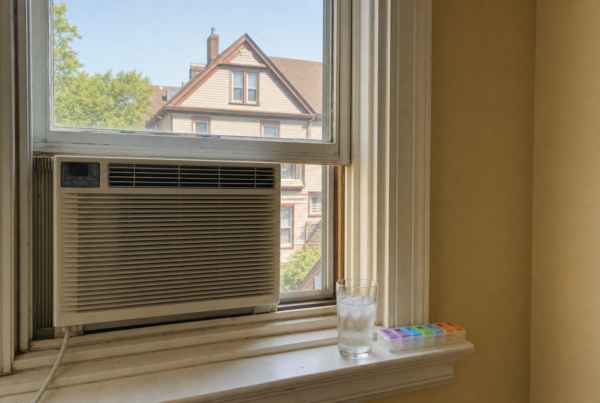
Put the window AC in the bedroom, not the living room. Sleep is where heat causes the most damage in older adults. If there’s one unit in the house, it belongs where the parent sleeps.
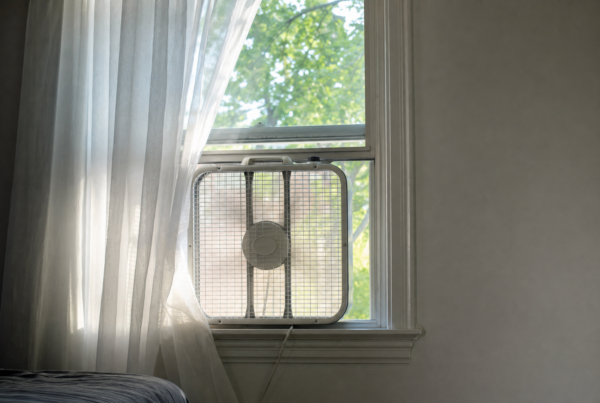
Use fans correctly. A box fan in a window facing out pulls hot air out of the house. On the shady side of the house, a fan facing in pulls cooler air in. A ceiling fan or oscillating fan alone, in a hot room with the windows closed, just moves hot air around and doesn’t help much.
Create one cool room. If cooling the whole house isn’t realistic, cool one room well, and have the parent spend the hot part of the day in it. The basement often works. So does a first-floor room with a window unit and blackout curtains.
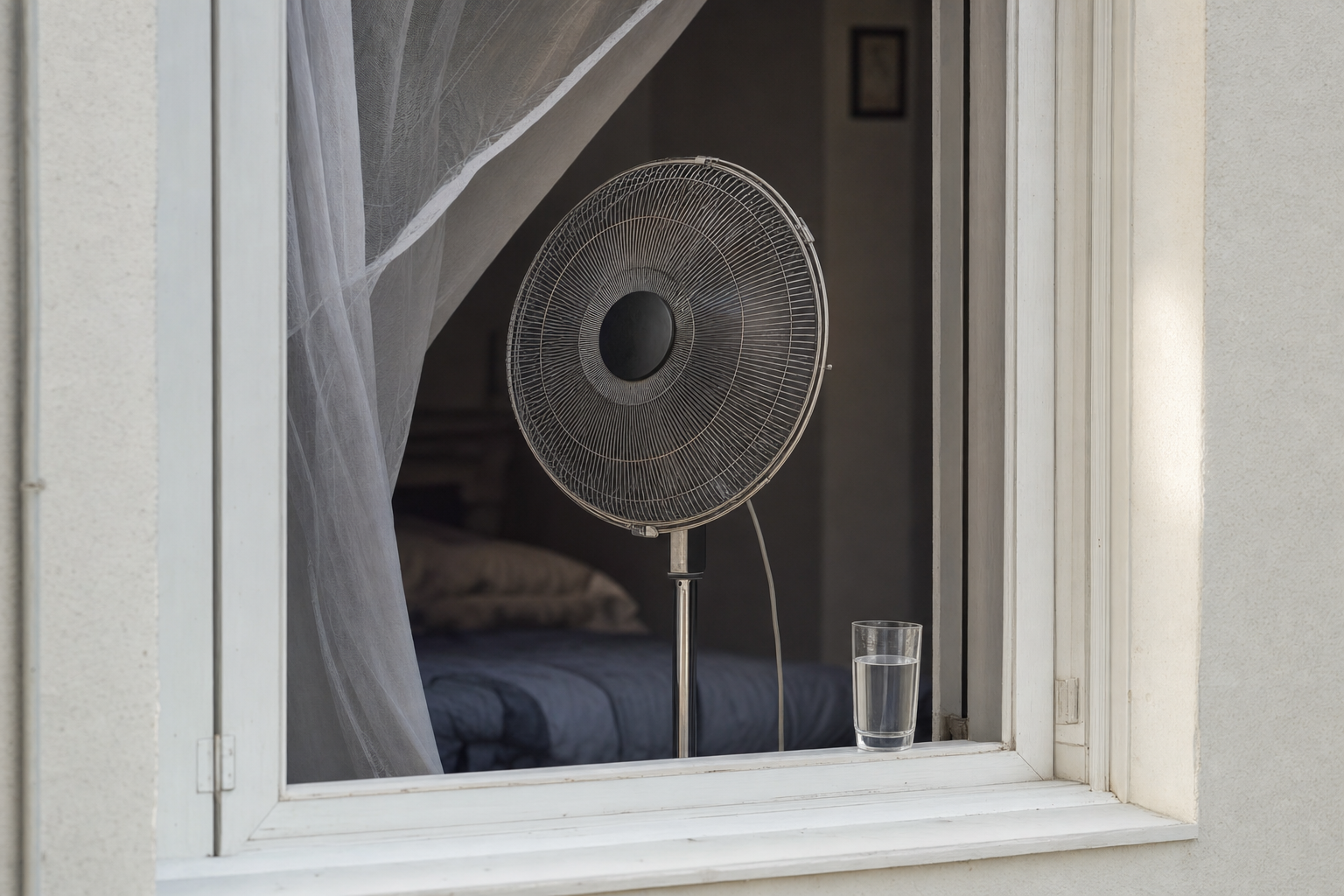
Keep water visible. Fill a pitcher in the morning. Set it on the counter. The goal is not a specific ounces target, it’s just that the water is in sight all day long. Older adults often don’t feel thirsty until they’re already low.
Here’s a quick reference for what actually moves the needle on a hot day:
| Strategy | Effort | Impact |
|---|---|---|
| Close blinds on sunny side by 9 a.m. | Low | High |
| Window AC in bedroom | Medium | Very high |
| Box fan out, box fan in (night) | Low | High |
| Cold washcloth on wrists and neck | Low | Medium |
| Cool shower or bath midday | Low | High |
| Avoid oven and stovetop cooking | Low | Medium |
| Move to a cooling center for the afternoon | Medium | Very high |
What warning signs to watch for during hot weather
Heat illness in older adults doesn’t always look like a movie collapse. It often shows up as confusion first, hours before anything more dramatic.
Call the doctor or head to urgent care if a parent shows any of these during a hot stretch:
- New confusion or unusual sleepiness. This is often the first sign, and it’s the one families miss.
- Headache that won’t go away with water and rest.
- Skin that’s hot and dry, or flushed and no longer sweating.
- Dizziness, especially when standing up.
- Nausea or a sudden loss of appetite in someone who usually eats fine.
- Muscle cramps in the legs or abdomen.
- Weakness that’s noticeably worse than yesterday.
Call 911 for any of these:
- Body temperature above 103°F.
- Loss of consciousness, even briefly.
- Rapid pulse with confusion.
- Vomiting that won’t stop.
The Wisconsin Department of Health Services publishes heat guidance every summer and issues alerts when conditions warrant. Families with older parents in Milwaukee should sign up for local weather alerts on their phone. When a heat advisory comes through, that’s the moment to check in.
How in-home caregivers help seniors stay safe in the heat
The honest answer: mostly by being there. A caregiver in the house during a hot week catches things a phone call from an adult child in Madison or Chicago never will.
Practically, a caregiver from Advanced Care can:
- Prompt water throughout the day, not just at meals.
- Prep cold meals so the oven and stovetop stay off. Sandwiches, cold pasta salad, cut fruit, yogurt.
- Draw the blinds in the morning and open the windows at night, on a schedule.
- Move a parent from a hot upstairs bedroom to a cooler downstairs room for the worst afternoons.
- Help with a midday cool shower or a cold-washcloth cool-down, especially for someone who can’t safely manage the bathroom alone.
- Watch for the early confusion and sleepiness that signal trouble.
- Handle transportation to a cooling center, a library, or a doctor’s appointment when the house gets unsafe.
- Manage medication reminders so a parent doesn’t skip or double up during a disrupted routine.
For families already using personal care and companion services, summer usually means adjusting hours rather than starting over. A parent who does fine with three mornings a week in April may need daily check-ins in July. Wisconsin’s Family Caregiver Program, which Advanced Care participates in, lets a family member become the paid caregiver through Medicaid. That matters in summer because the person watching the parent’s water intake and cool showers is often already the daughter or son who lives nearby, and getting paid for that time makes it sustainable.
Local Milwaukee resources for seniors during summer heat
A parent doesn’t have to ride out a heat wave in a hot house. Milwaukee has real options.
- Cooling centers. The City of Milwaukee opens cooling sites at public libraries and senior centers when heat advisories are in effect. Racine, Waukesha, and Kenosha do similar. A quick call to 211 will get a current list.
- Milwaukee County Department on Aging. Their senior meal program includes lunch at community sites that are air-conditioned. It’s a free way to spend the hottest part of the day out of the house.
- Aging and Disability Resource Center (ADRC). Every county has one. They handle everything from fan distribution programs in some years to Medicaid home care applications. In Milwaukee County the ADRC is a good starting point for families new to the system.
- We Energies special needs registry. Older adults with medical conditions can register to receive advance notice of planned outages and prioritized reconnection after storms. Worth doing before summer, not during.
- 211 Wisconsin. Free, 24/7. They know what’s open, what’s closed, and who’s still taking calls.
Advanced Care serves families across the Milwaukee metro, including Racine, Waukesha, Kenosha, Brookfield, New Berlin, Franklin, Oak Creek, West Allis, and Wauwatosa. You can read more about the team of caregivers, coordinators, and registered nurses on the site.
FAQ
What temperature is dangerous indoors for a senior?
Sustained indoor temperatures above 80°F, especially at night, raise the risk of heat illness for older adults. Above 85°F, risk climbs sharply, and someone on blood pressure medication or with a heart condition should not be sleeping in that room. Get them to a cooler space, even if it’s the basement or a friend’s house.
Does Medicaid cover in-home care during a summer health crisis?
Wisconsin Medicaid offers programs that may cover in-home care, including situations where a family member becomes the paid caregiver. Rules vary by program (IRIS, Family Care, Title 19) and by household. Call Advanced Care or the local ADRC to find out what your family may qualify for.
Can a caregiver just come during heat waves, or does it have to be ongoing?
Care can be scheduled to match the situation. Some families use daily care year-round. Others increase hours during summer or after a hospitalization and scale back later. The starting point is a free in-home assessment with a registered nurse.
What if a parent refuses to turn on the AC to save money?
This is common. Sometimes it helps to have someone other than an adult child explain the risk. A caregiver, a doctor, or a nurse carrying different weight than a phone call from a son can sometimes shift the conversation. Utility assistance programs through Wisconsin DHS may also help with the bill.
How Advanced Care Milwaukee can help
Summer safety for an aging parent isn’t complicated in theory. Water, cool rooms, someone paying attention. It’s the "someone paying attention" part that gets hard when family lives across town or across state lines, and when the worst days of the year are also the days everyone’s schedule is stretched thinnest.
If you or a loved one is heading into another Milwaukee summer in a house without central air, or with medications that make heat riskier, Advanced Care offers personal care, companion care, medication reminders, and the Wisconsin Family Caregiver Program for families who want a relative to be the paid caregiver.
Call Advanced Care for a free in-home assessment to learn more about what summer support could look like for your family.